You'll receive humane, data-driven goose control in East Liberty using regular monitoring, GIS mapping, and monitoring devices to pinpoint goose concentrations, nesting areas, and pathways. Our team applies habitat modifications (grass height management, 6-10 ft natural buffers, access prevention), utilize varied deterrent methods (trained service dogs, sound deterrents, water deterrents, safe repellent products), and schedule treatments based on nesting and molting cycles. All procedures adhere to MBTA and state regulations, featuring incident logs and compliance checks. Anticipate more than 50% decrease in problems, safer pedestrian areas, and improved turf quality-subsequently, discover how our solutions are customized for schools, parks, and HOAs.
Core Findings
- East Liberty experts delivering humane goose deterrence: location surveys, regular observation, and immediate-response control techniques to reduce conflicts.
- GIS analysis of water, turf, loafing zones, and pedestrian flows to target hotspots and adjust strategies in real time.
- Environmental modification and control: creating natural shoreline buffers, grass modifications, securing potential entrances, and implementing pond edge and overhead wire protection.
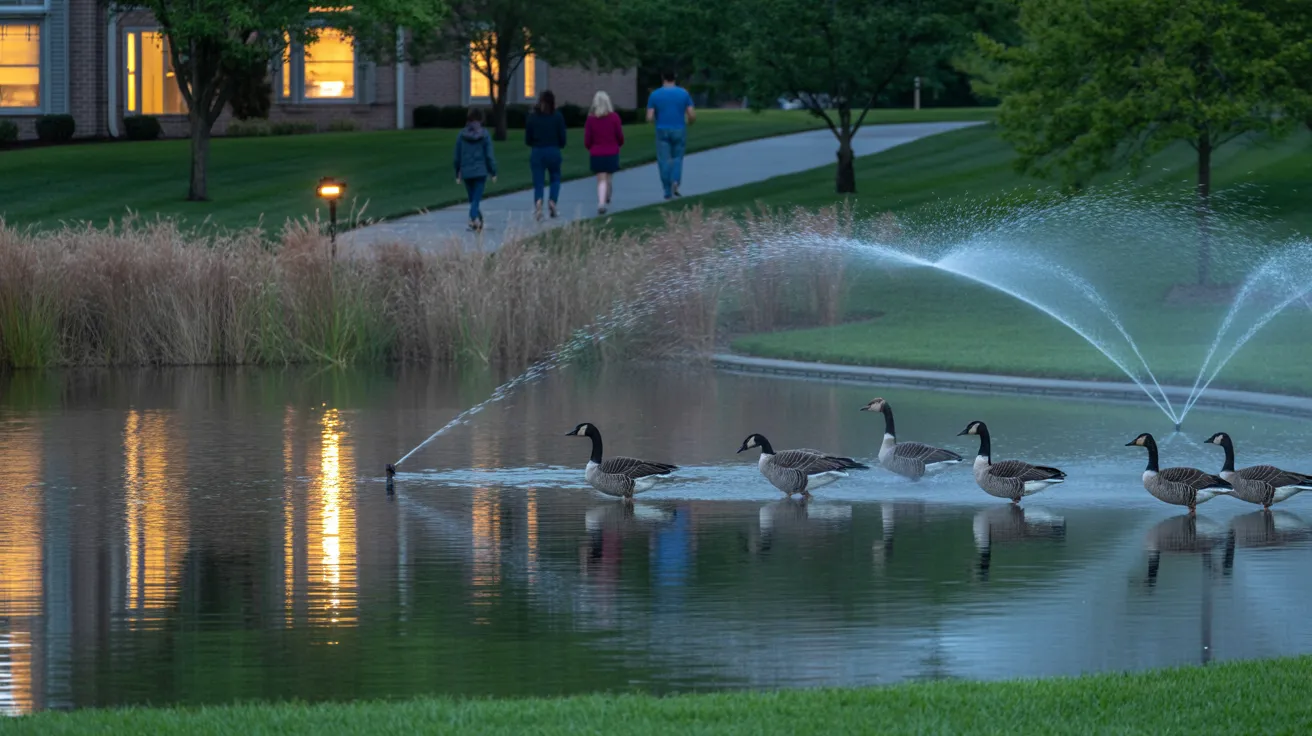
- Employing dynamic deterrence and behavioral training: specialized security dogs, motion-activated sprinkler systems, acoustic solutions, specialized repellents, and established de-escalation protocols to avoid animal adaptation.
- We focus on seasonal operations including nest identification and mapping from March-May, intensified molt-season group control, and ongoing outcome assessment using cameras and weekly tally checks.
Responsible Goose Management for Commercial Sites
Assess location specifics to create a humane and efficient goose monitoring strategy for your facility. You must measure population size, age distribution, and nesting sites, then map water sources, grass areas, and pedestrian flows. Document urban goose patterns at sunrise and sunset, and track migration routes to forecast periodic increases. Employ GIS to analyze food availability, rest zones, and risk areas, focusing on critical zones.
Make habitat adjustments that reduce attractiveness while avoiding harm: control turf height, limit nutrient-rich grass species, and install shoreline vegetation barriers. Execute systematic harassment techniques including professional dogs, sight-based deterrents, and acoustic systems on rotating schedules to avoid habituation. Where permitted, conduct egg addling under proper licensing to control reproduction rates. Monitor results through weekly population counts, fecal surveys, and incident documentation, then adjust strategies based on measured results.
Home Wildlife Prevention Methods That Actually Work
Try implementing animal exclusion strategies (including blocked access points, chimney caps, vent guards) with outdoor environment changes that remove attractants like accessible water sources, heavy brush, and available food. Assess and evaluate results by installing monitoring cameras and inspecting for tracks or droppings to verify reduced wildlife activity. Incorporate safe deterrents and devices-approved deterrent sprays, ultrasonic units, motion-sensing lights or motion sprinklers-and adjust placement and timing based on wildlife patterns.
Responsible Removal Methods
Start with proven humane exclusion methods that block entry instead of dealing with animals after they've made their way in. Attach 18-23 gauge galvanized hardware cloth across ventilation points, soffit gaps, and chimney caps; attach with corrosion-resistant screws and fender washers at 4-6 inch spacing. Install window screens with 0.025 inch wire or stainless mesh to block bats and insects while maintaining airflow. Use netting barriers (polyethylene, 3/4 inch mesh) to secure eaves and porch undersides; secure with perimeter cables to eliminate sagging.
Seal building entry points with professional-grade elastomeric caulk and backer rod; for substantial gaps, install mortar or sheet metal flashing. Install one-way exclusion doors only after verifying no babies are present. Check integrity via light-leak inspections and thermal imaging, then arrange maintenance checks each quarter.
Outdoor Space Habitat Modifications
The best preventive measures often begin by changing attractive elements and pathways across the property. Initially remove regular sources of sustenance, moisture, and hiding spots. Seal garbage containers, clear away fruit debris, and elevate or protect composting areas. Drain or decrease water accumulation. Prune lower branches to eliminate ground-level entry points, and thin out thick shrubs that form tunnels.
Adopt natural vegetation to minimize desirable food options and create more variable cover. Replace grass near ponds with indigenous border vegetation that deter geese landings. Apply ground cover or stone barriers to interrupt pest pathways. Apply earth conditioning to promote drought-resistant, thick ground vegetation that fill spaces animals use.
Eliminate travel paths by setting up secure mesh beneath decks, sealing spaces under sheds, and establishing trimmed, illuminated border zones that improve exposure and minimize denning potential.
Safe Methods and Devices for Pest Control
Though environmental adjustments decrease attractions, proven repellents and equipment offer a measurable impact that alters wildlife patterns humanely. It's effective to create protective zones with animal deterrent compounds, grape-derived repellents, or chili-based deterrents at entry points, turf boundaries, and garden areas; renew post-rainfall to ensure proper function. Combine these with motion-activated irrigation systems set to brief spray intervals to create unexpected deterrent stimuli. For waterfowl management, treat grass areas with approved methyl anthranilate and keep tall plant buffers at water edges to minimize landing opportunities.
Deploy sound-based deterrent systems strictly in positions with verified direct visibility and acoustic feedback is eliminated; rotate frequencies and schedules to reduce habituation. Implement illumination-based prevention measures during dawn and dusk transitions. Track activity using monitoring cameras and modify positioning following observed approach vectors.
Seasonal Strategies for Breeding and Feather Renewal Cycles
Since Canada geese change behavior patterns and susceptibility throughout spring nesting and summer molting, it's important to align management strategies with each phase's biological patterns and legal requirements. Map and record nesting patterns by performing regular monitoring of territories between late March and May. Find and record active nests, document clutch size, and execute permitted egg-addling or oiling procedures before day 14, complying with federal and state guidelines. During incubation, enforce buffer zones around nests, reroute foot traffic, and arrange vegetation management when attendance is lowest to limit site fidelity.
In June-July, geese experience their flightless molting period. Clear or prevent access to molting shelters like dense vegetation islands and tall grass near water bodies. Minimize shoreline vegetation to improve predator detection, and control access to gathering areas. Intensify herding activities with trained dogs before the molt begins; transition to corridor fencing during the flightless period. Coordinate hazing after the molt.
Strategies for Managing and Reducing Aggressive Behavior
Although aggressive behavior in Canada geese is most intense in nesting season, you can measurably minimize confrontations by combining stimulus control with predictable, non-rewarding responses. Apply behavioral conditioning to separate human presence from territorial rewards. Standardize consistent approaches: stop, turn toward the bird, keep posture, and prevent retreat until the goose gives up space, then withdraw without giving reinforcement. Use consistent timing so the connection is evident.
Implement buffer areas that require geese to take different paths; strengthen compliance by avoiding interaction and blocking access. Deploy defensive signals (like whistling) when noticing threatening behavior including wing spreading; stop all signals once the bird backs down. Track behavioral patterns, proximity thresholds, and escape durations to assess reduced hostile behavior.
Environmentally Safe Repellents: Usage Guidelines
You can utilize botanical deterrent solutions like natural sprays containing methyl anthranilate, capsaicin, and garlic oil to reduce foraging and gathering without harming the geese and surrounding wildlife. Use these deterrents prior to main feeding times in the morning and late afternoon, and reapply after rainfall or irrigation following recommended dosages. You should align timing with nesting and molting cycles in East Liberty to optimize deterrent effectiveness while reducing the need for reapplication.
Natural Plant-Based Deterrent Solutions
Though chemical treatments can succeed in the short term, natural deterrents offer a lower-impact option for keeping away geese and nuisance wildlife around East Liberty properties. Try including native plantings with tall, sturdy structure-native grasses, sedges, or rushes-to reduce loafing and prevent easy entry. Add aromatic herbs such as rosemary, lavender, and mint along borders; aromatic elements create sensory deterrence and disrupt foraging. Use natural deterrent sprays to popular goose gathering spots; these compounds alter taste perception and promote aversion. Install tall ornamental grasses to block views near water edges, restricting landing zones. Establish vegetative buffers a minimum of 6-10 feet deep along shorelines. Confirm plant hardiness for USDA Zone 6 and confirm noninvasive selections to maintain environmental balance.
When to Best Apply
As timing drives effectiveness, arrange eco-friendly repellent solutions around goose patterns and area utilization. You'll get optimal timing by matching uses with seasonal indicators and typical activities. During winter's end, treat turf as ice recedes; geese seek feeding areas then, so early coverage promotes avoidance. Reapply before spring green-up when nutritious shoots draw flocks. During nesting period (approximately March-May), focus on perimeters and access routes, not nests. Post-fledging, intensify shoreline and fairway coverage as family groups expand grazing areas. Before fall movement, establish continuous coverage on gathering spots to discourage staging. Post heavy rain, irrigation, or mowing, refresh per label guidelines to preserve active residues. Monitor goose counts and grazing intensity weekly; modify frequency and spatial patterns to sustain repellency with limited inputs.
Prevention Techniques for Rooftops, Ponds, and Play Areas
Although every location features particular challenges, reliable prevention on rooftops, ponds, and playfields depends on structural deterrents and site alterations that prevent perching, nesting, and loafing opportunities. Regarding roof areas, place roofline netting to seal access under parapets and mechanical frames, and fit gutter guards to stop debris retention and nesting. Install low‑profile spikes or post‑and‑wire on ledges greater than 2 inches. Seal penetrations with stainless hardware cloth. At pond locations, deploy tensioned perimeter wire at 8-12 and 18-24 inches to discourage goose climb‑outs; incorporate overhead grid wire at 15-25 feet spacing where feasible. Minimize shoreline turf, enhance vegetative buffers, and disrupt sightlines. For athletic areas, install 2-3 strand exclusion around sidelines, clear standing water, select taller fescue cultivars, and limit edge fertilization.
Emergency Response and Real-Time Monitoring Services
We offer 24/7 dispatch readiness, with incident intake and technician routing launched within minutes. We emphasize on-site assessment speed, determining arrival windows calculated from distance, traffic data, and risk severity. You benefit from continuous activity tracking through detailed timestamped records, sensor data, and trend reports that guide adjustments to deterrents and patrol intervals.
Around-the-Clock Dispatch Service
As geese threaten sensitive areas, our dispatch readiness ensures expert teams deploy rapidly with appropriate tools and situational data. You benefit from a structured response protocol that focuses on immediate response and personnel preparation. We keep fully equipped vehicles, stocked with hazing equipment, deterrent systems, PPE, and telemetry systems in prepared response units. Field teams obtain detailed site assessments, including access limitations, animal movement data, and legal parameters prior to response initiation.
You get 24/7 call handling, priority coding, and optimized routing automation to reduce response delays. We oversee team location, ETA, and resource levels in real time. Teams follow protocols for equipment verification, communications checks, and safety reviews while traveling. Post-dispatch, we log results, maintain geographic alert zones, and arrange targeted follow-ups, ensuring connection between initial response and continuous observation protocols.
Site Inspection Duration
From the moment teams deploy, quick situation analysis transforms here dispatch readiness into quantifiable on-ground results. You gain specific timing estimates, exact route mapping, and advance location information, which reduce assessment time. Technicians verify ingress points, danger areas, wildlife concentration, and contact zones in moments, then quantify risk by position and timing. We provide a dated analysis that matches observed indicators with suggested measures and resource allocation.
We track the time between dispatch and visual verification, not just arrival at the location. This timing directs the positioning of deterrents, PPE, and capture equipment. You get a precise action determination for immediate mitigation, as well as prioritized tasks arranged by effectiveness and safety. The outcome delivers a quick, reproducible assessment process that stabilizes conditions and enables decisive field operations.
Activity Monitoring in Real-Time
Activities commonly commence before dawn, with real-time surveillance connecting quick response to constant surveillance in a streamlined operation. You install monitoring devices, camera traps, and tracking systems to record migration patterns, population counts, and access times. You combine these inputs with continuous monitoring to identify variance from baseline patterns almost immediately.
Through activity mapping, you convert observations into spatial mapping layers that highlight movement paths, rest areas, and high-stress locations. You associate chronological data points with environmental conditions, people movement, and food availability to predict timing patterns. When thresholds trip, you initiate countermeasures and adjust directions on the fly.
You monitor and audit performance each day, fine-tune system configuration, and enhance alert logic. This systematic methodology decreases response latency, maintains compliance, and preserves consistent, pest-free operations.
Specialized Plans for Educational Facilities, Recreational Areas, and Homeowner Associations
Because each property type has unique usage characteristics and risk factors, we create site-specific goose management plans for educational facilities, public spaces, and residential communities determined by measured environmental characteristics, people's behavior, and compliance requirements. You receive a detailed analysis: nesting site documentation, lawn structure analysis, water feature placement, travel routes, and conflict hotspots. For academic campuses, we prioritize child security through safety zones, dawn patrol planning, curriculum integration for attitude development, family communication, and strategic funding for gradual control measures.
Regarding parks, we synchronize approaches with high-traffic periods, field bookings, and maintenance timelines; we specify signage standards, hazing windows, and fecal-load thresholds that trigger cleaning. In homeowner associations, we map pedestrian flow, animal spaces, and water feature setbacks; you get enforceable policy language, vendor schedules, and performance metrics linked to minimizing grievances and lawn rehabilitation.
Understanding Local and Federal Wildlife Regulations
Even though results matter, it's essential to follow the Migratory Bird Treaty Act (MBTA), state wildlife codes, and city codes overseeing harassment, nest handling, and waste handling. You need to confirm species classification, timing restrictions, and approved techniques before deploying control measures, egg treatment, or moving nests. Perform site assessments, record population numbers, and chart activity locations to justify selected techniques.
You'll streamline permit management by identifying the correct issuing authority (USFWS, state wildlife agency, or city) and filing methodology-based applications with relevant data. Maintain chain-of-custody for any collected samples and record prevention timetables, habitat impacts, and waste disposal manifests. Meet reporting obligations by submitting event records, adverse-event summaries, and annual performance reports on schedule. Train staff on procedures, revise SOPs with compliance updates, and review compliance quarterly.
Success Stories From East Liberty Neighborhoods
Following a 90-day implementation across East Liberty's parks and commercial areas, measurements show notable reductions in waterfowl activity, ground damage, and bacterial presence. Results show a 62% reduction in daily goose populations, a 48% decrease in waste concentration areas per hectare, and a 35% decrease in E. coli contamination levels in shoreline specimens. These results are attributed to coordinated deterrence, permitted nest management, and regular sanitation protocols.
In Friendship Park, you document 80% turf recovery and no required landscaping re-sods. Across Baum Boulevard plazas, accidents caused by droppings reached zero. Community engagement drives compliance; resident feedback confirms improved morning availability and reduced confrontational incidents. Regular updates to trend logs, validate with photo points, and provide quarterly dashboards, enabling adjustments to deterrent timing and device placement.
Popular Questions
What Are Our Service Hours and Emergency Response Times on Weekends?
We are available every day from 7:00 AM-7:00 PM, maintaining identical weekend availability; our emergency service runs 24/7. Picture it as a guiding light: routine operations follow set times, while emergencies trigger immediate action. When you call, we evaluate your needs within minutes, dispatch a technician, and inform you of an estimated arrival time based on distance, current workload, and urgency. We monitor response performance, focus on safety, and ensure additional on-call support.
How Quickly Can You Provide an On-Site Assessment and Quote
We generally deliver an property inspection and proposal within 24-48 hours; in many cases, we provide a same‑day assessment. You schedule, we confirm scope, and a certified professional examines to inspect access areas, nesting sites, and potential risks. Should access be restricted, we carry out a virtual walkthrough to accelerate evaluation and cost estimation. You'll get a written quote with methods, timeframes, regulatory requirements, and removal procedures, usually within hours of the assessment.
What Are Your Warranty and Satisfaction Guarantee Policies?
Yes. You get a comprehensive service warranty that covers covered work, performance criteria, and term length (typically 30-90 days, project-dependent). Should results fall short of agreed standards after prescribed remediation, you can receive a full refund or free service repeat, per contract. We maintain pre/post conditions, photos, and report metrics to verify results. We don't cover customer-caused changes and third-party interference. You receive clear response times, claim procedures, and confirmation procedures in writing.
What About Technician Licensing, Insurance, and Background Checks?
Absolutely. We employ licensed technicians who meet local and state regulations, hold active insurance, and go through thorough background checks. Our verification process includes credentials, keep updated insurance certificates, and perform compliance audits annually. Technicians complete ongoing safety and wildlife-handling training, covering PPE, ethical animal handling, and exclusion standards. Feel free to ask for insurance and licensing documentation before work begins. These measures reduce operational risk, assure legal compliance, and deliver reliable, verifiable service quality throughout our service area.
What Are Your Accepted Payment Methods and Financing Solutions?
We accept all standard payment options including cards, transfers, and checks; plus we accept digital wallets. We offer financing options through our trusted financing partners, with transparent terms, fixed rates, and no prepayment penalties. You'll receive a comprehensive invoice with payment details when your service is confirmed. Following this: we confirm your payment, book your appointment once payment clears, and provide receipts and financing documentation for your records right after the transaction is complete.
Wrapping Up
You've seen how compassionate, data-driven methods maintain geese and wildlife in equilibrium across residential, commercial, and public spaces. When you integrate seasonal planning, habit adjustment, green repellent solutions, and rapid monitoring, you minimize issues and meet regulations. Tailored plans for schools, parks, and HOAs generate quantifiable outcomes. Think of your property as a well-tuned lab instrument-careful tweaks produce clear, repeatable outcomes. Work alongside East Liberty experts, and you'll preserve protection, appearance, and tranquility without sacrificing ethics.